
All Info
Global Retreat Schedule 2-9 May 2026
NOTE: this schedule is subject to change
More details will be announced at the beginning of the retreat
Sat 2 May
Arrival: You can arrive at your own pace between 12.00 – 18.00 (noon – 6PM) and get settled in your room.
Note: If you arrive early, you need to take care of your own lunch
19.00 The retreat starts with the welcome dinner for all participants, where you will get to know each other
20.00 After dinner, Carmen will give an introduction and offer the first lecture/presentation
NOTE: if you prefer to travel to the retreat together or share a taxi from the nearest train station etc., you can let others know in the group whatsapp
Sun 3- Fri 8
08.00 Breakfast
09.00 Meditation
10.00 Art Session 1
13.00 Lunch + break
16.00 Art Session 2
19.00 Dinner
20.00 Evening program or free time
NOTE: On Wed 6 there’s free time to visit Assisi or other parts of Umbria, by yourself or with other students.
And we are lucky, as our retreat coincides with the Festival of Calendimaggio this year!
Carmen will check with the retreat center if it’s possible to have an early lunch (say noon) and a late dinner (say 19.30) on this day, so we can make the most of our time off.
If you prefer to leave before lunch and/or stay out for dinner, this is totally fine, as long as you inform the cook that you’ll stay away.
Sat 9
08.00 Breakfast
09.00 Meditation
10.00 Art Session
12.00 Closure: Exhibition & Dedication
13.00 Lunch
After lunch (around 14.00hr/2pm): Farewell
NOTE: You can often get a ride from a participant with a car, or travel with others by public transport or shared taxi to the airport or your next destination

Carmen’s Little Shop
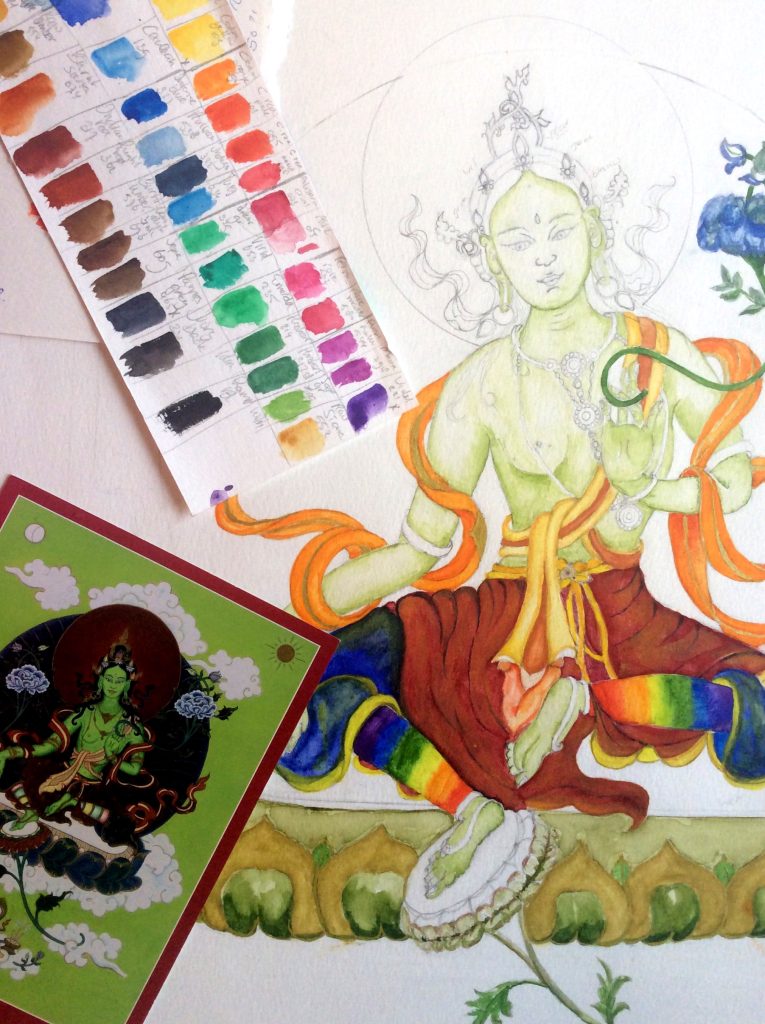
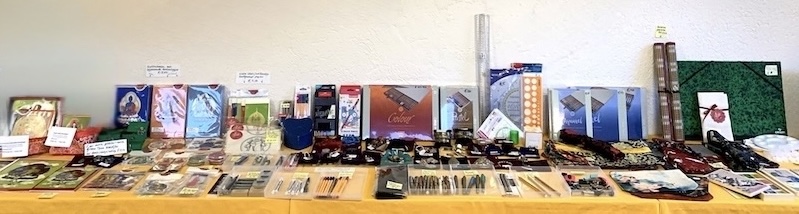
Carmen will bring her ‘Little Shop‘ to the retreat, where you can buy her thangka cards / bookmarks / stickers, as well as her Buddha notebooks. In addition all basic drawing materials can be purchased, such as (mechanical) pencils, good erasers, fineliners, gold pens, blender pencils, transparent paper, brushes etc. etc.
Please bring enough cash for this (which is also useful for buying extra things at the retreat location, or a bus ticket etc.)
NOTE:
As this year Carmen will be traveling by car to the retreat, she can bring the following extra materials on request (please fill in on the form at the bottom of the page. To be paid in cash at the retreat):
 |
Fabriano Drawing Paper Can be rolled up in a tube. Size: 50×65 cm (19.69″ x 25.59″) Weight: 200 gsm |
€3 per sheet |
 |
Hahnemühle Watercolour Board (thick paper) Also good for drawing. Can be rolled up in a tube. Size: 50×65 cm (19.69″ x 25.59″) Weight: 500 gsm |
€9 per sheet |
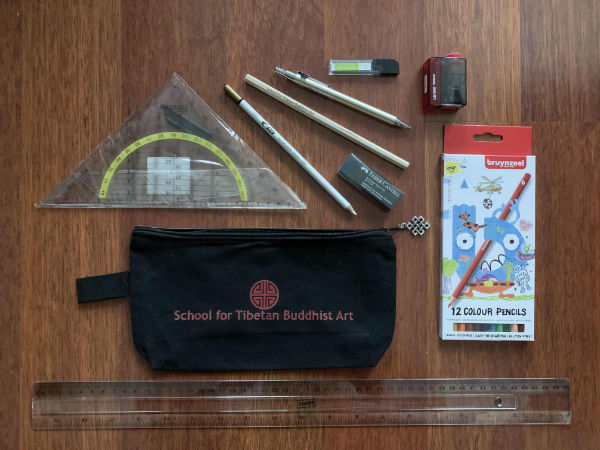 |
The Basic Set – Carmen’s Favorite Thangka Drawing Materials: • Long 50cm (19.69″) ruler €8 • Cotton pencil case with Buddhist Pendant €8 • Large set square €5 • Mechanical pencil 0,5mm €4 • Mechanical pencil 0,5mm refills €1 • Pencil School for Tibetan Buddhist Art €1 • Adjustable Pencil sharpener €4 • Carmen’s favorite Eraser €3 • Carmen’s favorite Pencil Eraser €3 • Set of 10 colored pencils €8 |
Total value €45 Retreat Price: €30 |
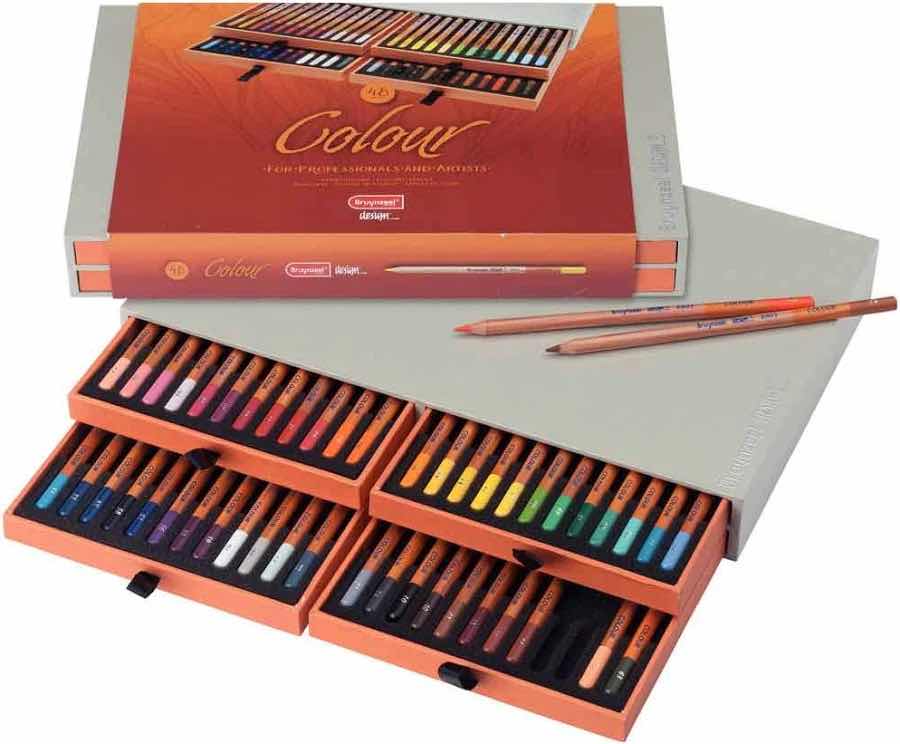 |
Bruynzeel Design Colour Pencils Box 48 Colored pencils in a beautiful, sturdy box |
€45 |
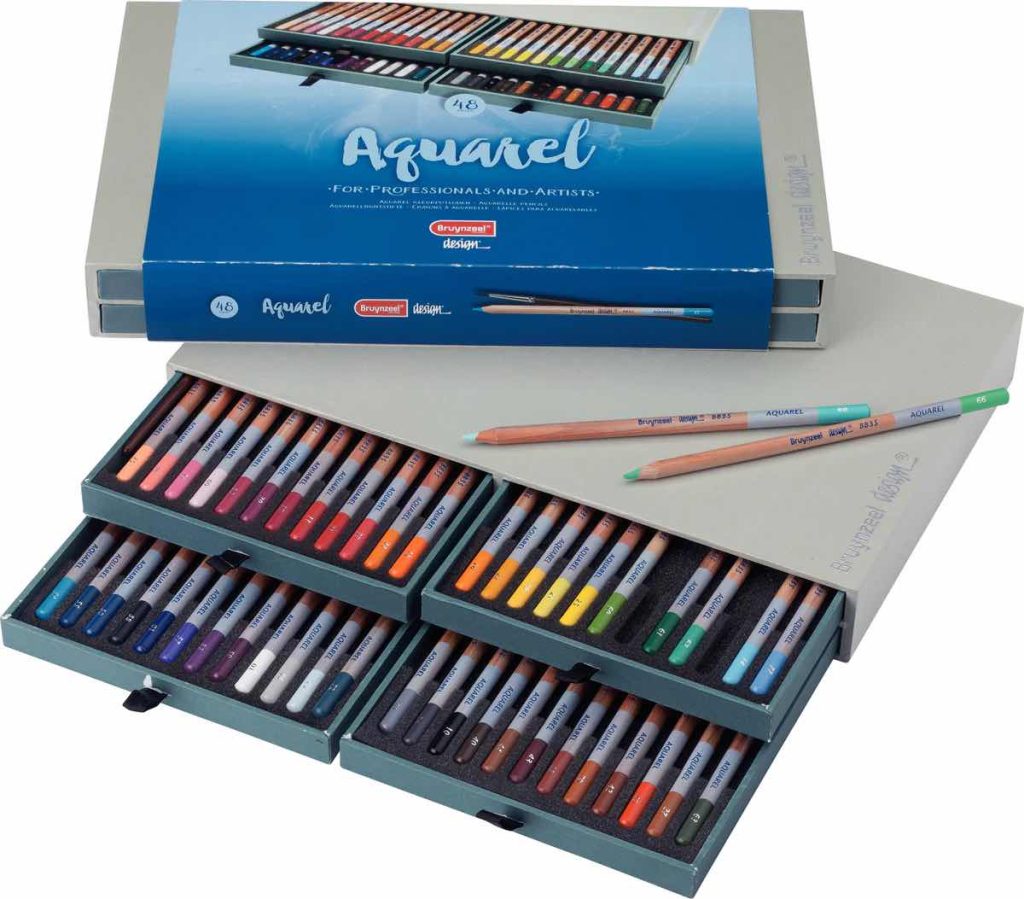 |
Bruynzeel Design Aquarel Box 48 Watercolour pencils in a beautiful, sturdy box |
€50 |
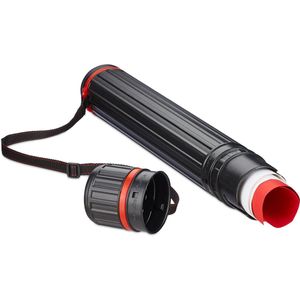 |
Drawing Tube Diameter: 8 cm (3.15″) Length: extendable from 84 cm to 108 cm (33″ to 42.52″) |
€15 |
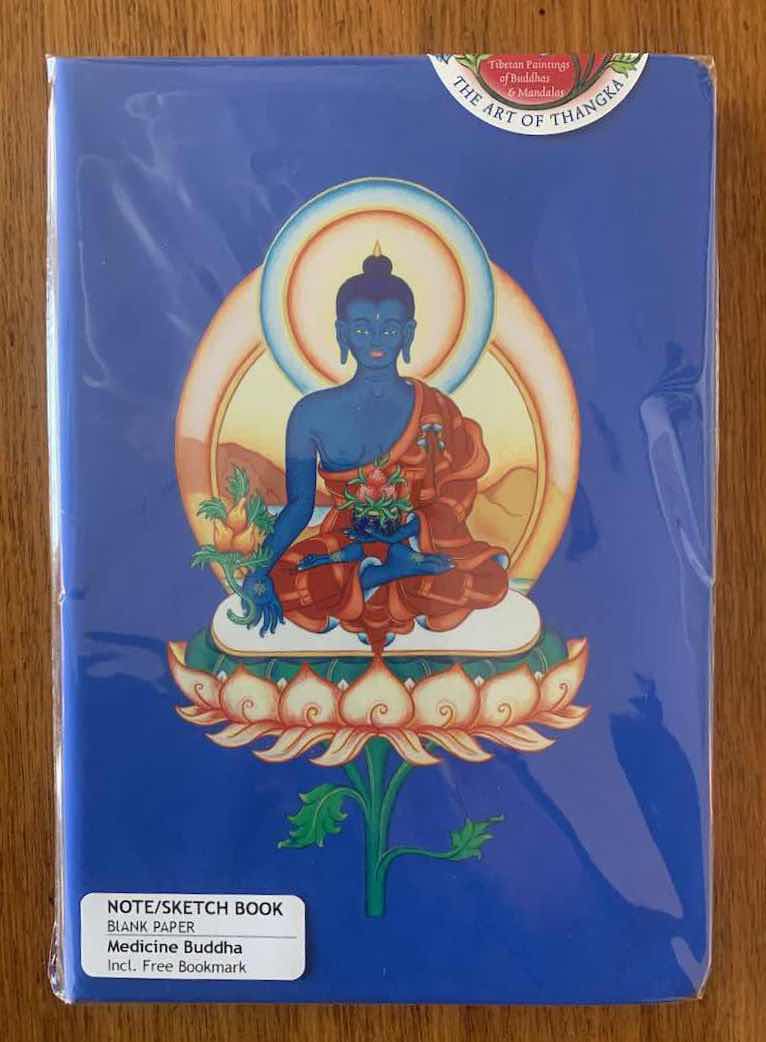 |
Notebook Medicine Buddha With Carmen’s thangka of the Buddha of Healing. Size: A5 / 148 x 210 mm (5.83″ x 8.27″) Blank pages Incl. free Medicine Buddha Bookmark |
€19 |
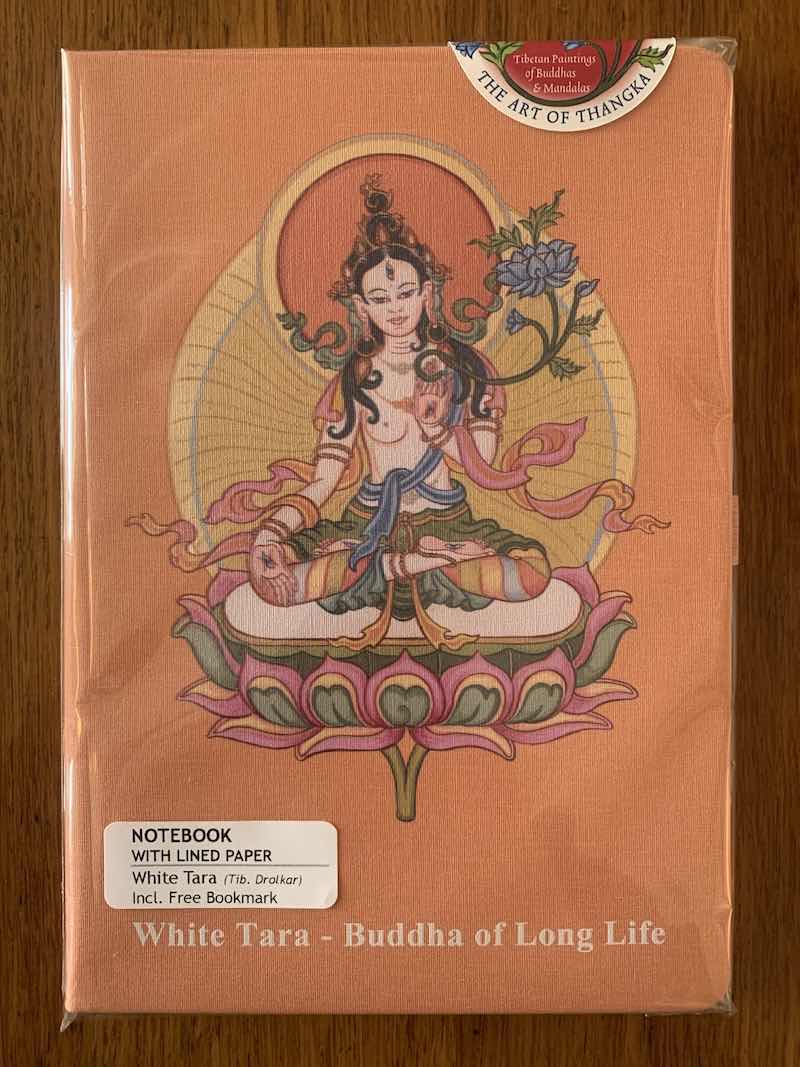 |
Notebook White Tara With Carmen’s thangka of the Buddha of Longevity. Size: A5 / 148 x 210 mm (5.83″ x 8.27″) Lined pages Incl. free White Tara Bookmark |
€19 |
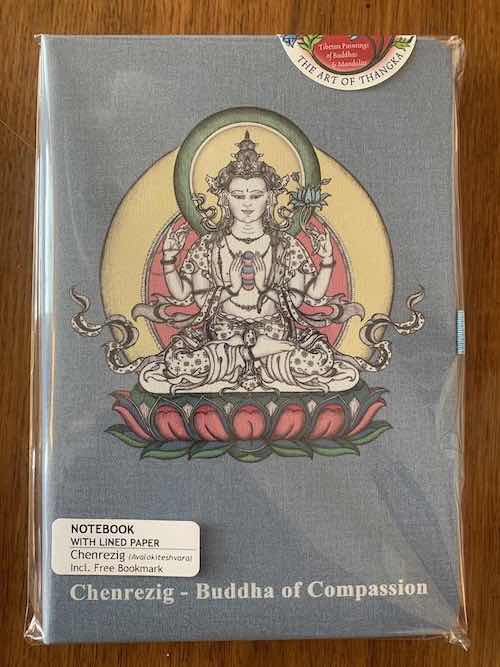 |
Notebook Chenrezig (Avalokiteshvara) With Carmen’s thangka of the Buddha of Compassion. Size: A5 / 148 x 210 mm (5.83″ x 8.27″) Lined pages Incl. free Chenrezig (Avalokiteshvara) Bookmark |
€19 |
Things to think of
Weather and clothes: May is one of the best times to visit Umbia, with warm, pleasant spring weather, not too hot and not too cold. It may also rain occasionally.
Expect a daytime high of around 21℃ (70℉) with a low of 11℃ (52℉) overnight.
It’s best to bring different layers of clothes as well as:
- Slippers or thick socks (for the meditation area)
- Walking shoes
- Notebook + pen
- Ear plugs
- Mosquito repellant (though I’m not sure if this is needed)
- Umbrella or Light rain coat
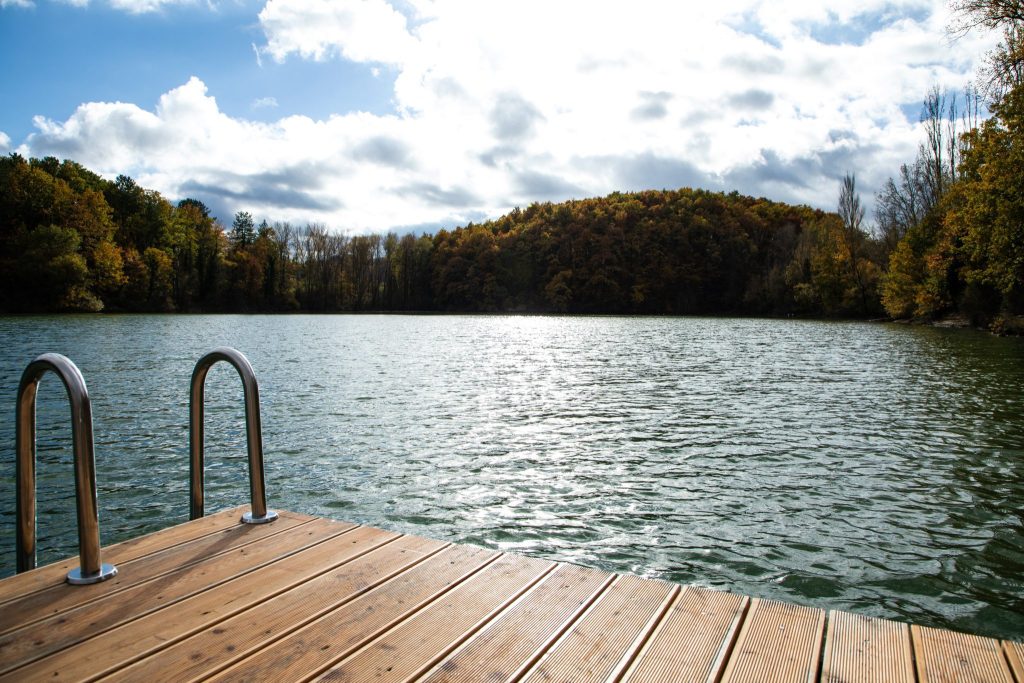
- Swimsuit (to swim in the private lake if it’s not too cold)
Also
Would you like to share something with the group?
Think of musical instruments, yoga, a song from your country etc.
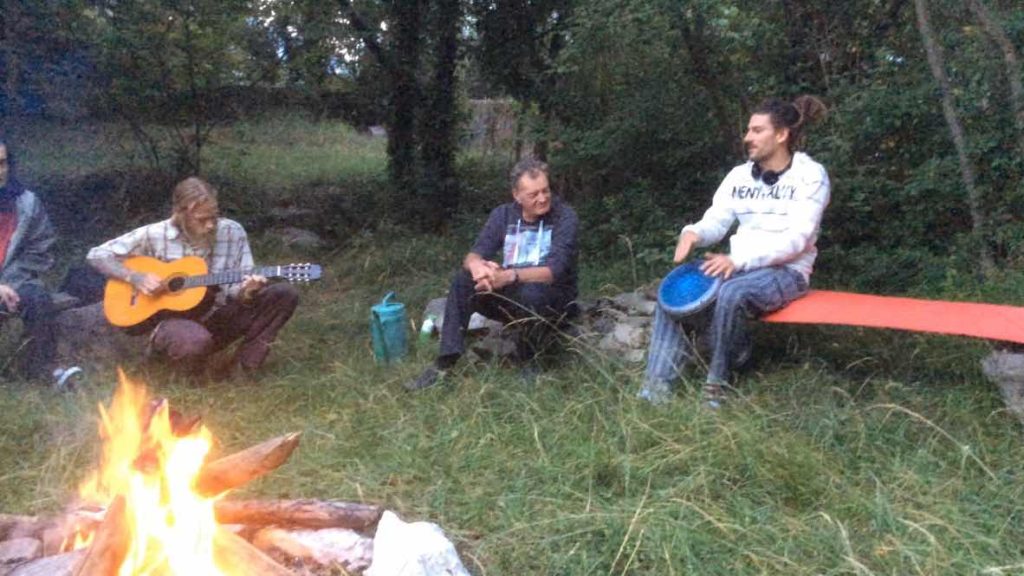
In the past decade, students have often brought something to the thangka retreat to share with the group, for example their guitar or other musical instrument so we could sing songs together on the last evening. You could also read a poem that they loved and want to share. Somebody brought their singing bowls and offered to give a small and relaxing concert, somebody offered to give a massage, and others were doing yoga in the mornings anyways and welcomed other participants to join.
If you have something to share, you are very welcome to!
Umbria, known as the “green heart of Italy,” offers numerous sightseeing opportunities, including historic hilltop towns, significant religious sites, and dramatic natural landscapes.
The nearest places to visit from our retreat location are Gubbio and Assisi:
Gubbio
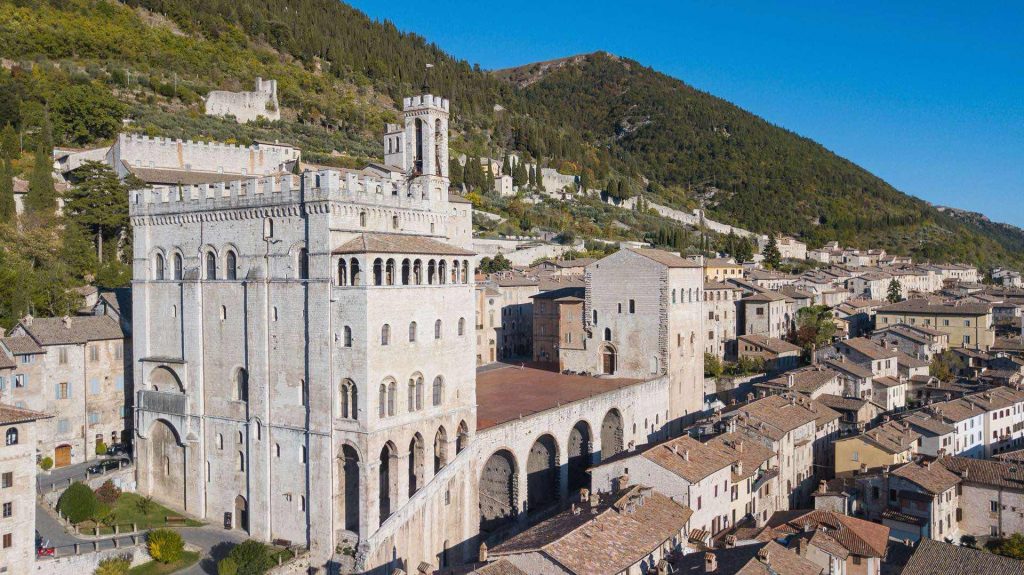
Gubbio is a well-preserved medieval gem featuring quiet alleyways, stone palaces, and the majestic Palazzo dei Consoli dominating the main piazza. A cable car ride up Mount Ingino offers breathtaking views.
Assisi
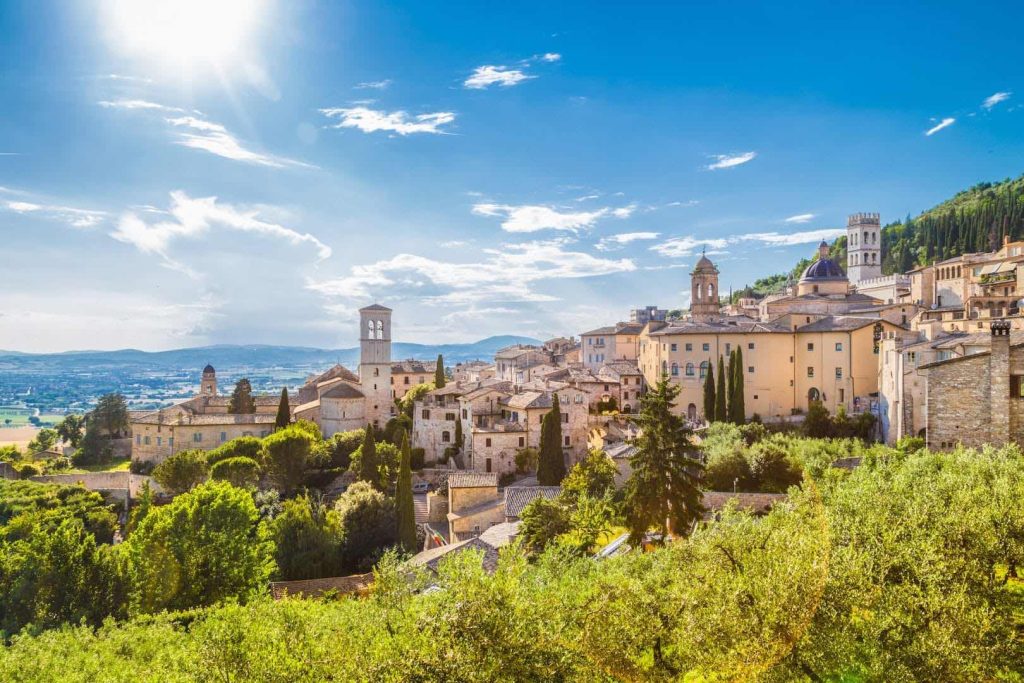
Assisi is a historic hill town in the Umbria region of central Italy, globally renowned as the birthplace of Saint Francis (1181–1226) and Saint Clare (1194–1253). It is a major site of Christian pilgrimage and a designated UNESCO World Heritage site since 2000.
Built on the slopes of Mount Subasio, the town is remarkably well-preserved with narrow, winding streets, watchtowers, and massive stone gates made from local pink-and-white limestone.
Official website
https://www.visit-assisi.it/en/
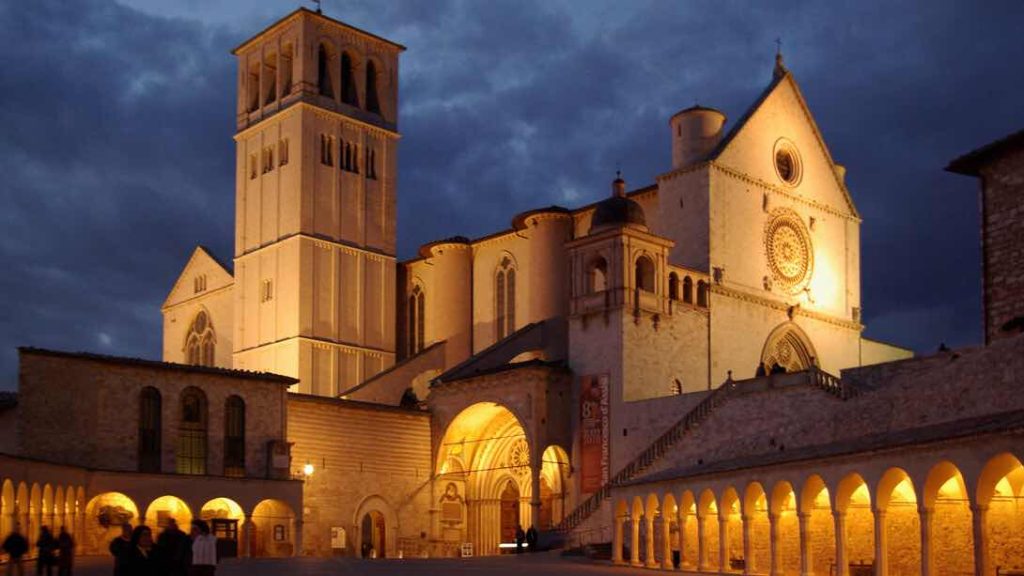
Assisi is the cradle of the Franciscan Order. Millions of pilgrims visit the tombs of St. Francis in the Basilica of San Francesco and St. Clare in the Basilica di Santa Chiara.
The town is a “fundamental reference point” for European art history, housing 13th-century frescoes by masters like Giotto and Cimabue that depict the life of St. Francis.
The Basilica di San Francesco
https://www.italynotes.com/stories/basilica-di-san-francesco
The Basilica di San Francesco is a massive two-level church containing the saint’s crypt and world-famous Early Renaissance paintings:
Art in the Upper Basilica – The Saint Francis cycle by Giotto:
https://arsartisticadventureofmankind.wordpress.com/2020/02/15/origins-of-medieval-tuscan-painting-ii-giotto-and-the-frescoes-of-the-basilica-of-st-francis-of-assisi/
Art in the Lower Basilica – The frescoes of brothers Pietro and Ambrogio Lorenzetti:
https://arsartisticadventureofmankind.wordpress.com/tag/basilica-of-saint-francis-of-assisi/
Other key attractions near Assisi
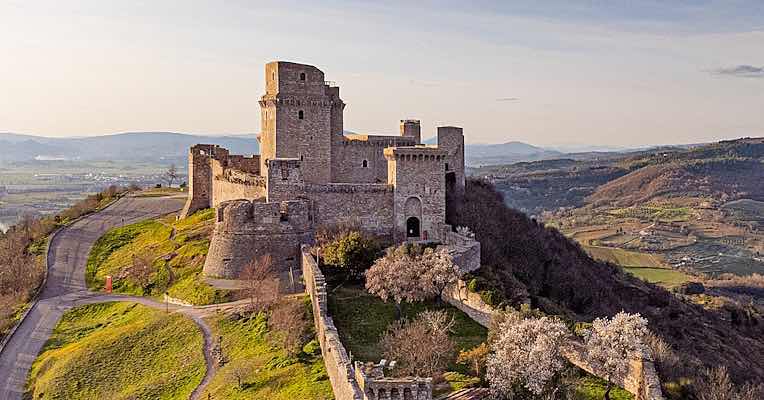
Rocca Maggiore
A 12th-century medieval fortress perched high above the town, offering panoramic views of the Umbrian valley.
Temple of Minerva
A remarkably intact Roman temple from the 1st century BC, now integrated into the Church of Santa Maria sopra Minerva in the central Piazza del Comune.
Basilica of Santa Maria degli Angeli
Located just outside the town, it enshrines the Porziuncola, the tiny church where St. Francis began his mission and later died.
Eremo delle Carceri
A peaceful forest hermitage on the mountain where St. Francis used to retreat for prayer.
Other Historic Towns & Cities in Umbria
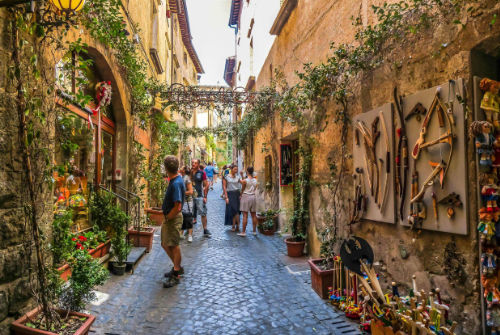
Orvieto
Perched dramatically on a volcanic cliff, this city is famous for its magnificent 14th-century Gothic Duomo with its intricate facade. You can also explore the fascinating Orvieto Underground is a labyrinth of caves and tunnels carved into the rock over millennia.
Perugia
The vibrant regional capital and a lively university city. Key sights include the Palazzo dei Priori, the National Gallery of Umbria, and the underground fortress of Rocca Paolina. The main square, Piazza IV Novembre, features the beautiful medieval Fontana Maggiore.
Spoleto
Spoleto is known for its Roman ruins, including an amphitheater, and the impressive medieval aqueduct, the Ponte delle Torri (Bridge of Towers). The town hosts a renowned cultural festival, the Festival dei Due Mondi.
Spello
Often cited as one of the prettiest towns in Umbria, known for its flower-strewn streets and Roman gates. It is particularly famous for its annual Infiorate festival, where streets are covered in elaborate flower mosaics.
Festival of Calendimaggio
6, 7, 8 and 9 May 2026
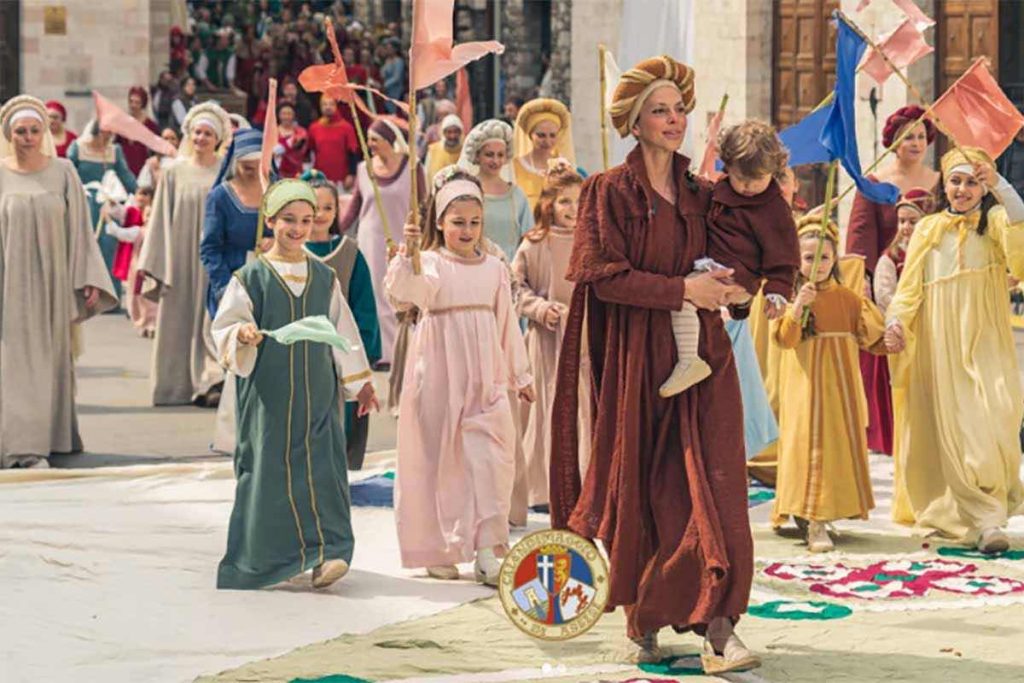
We are lucky, as our retreat coincides with the Festival of Calendimaggio this year!
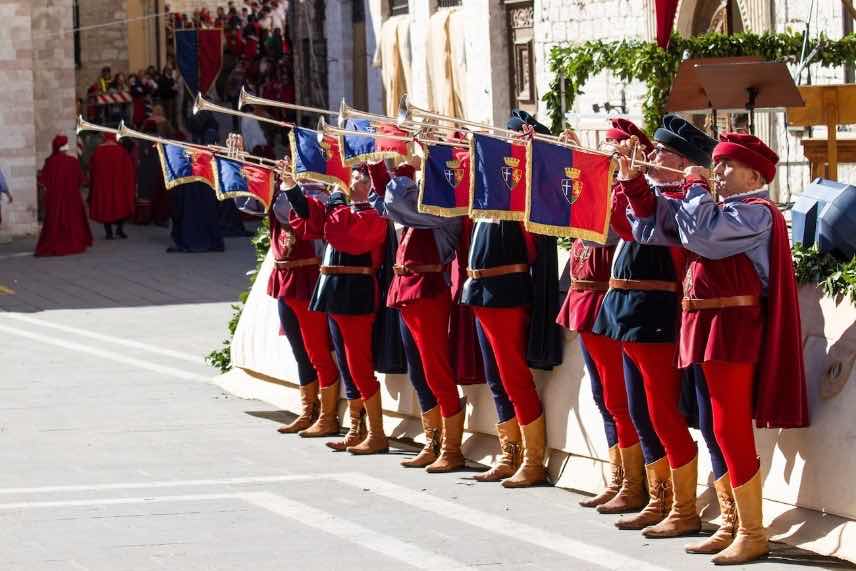
Calendimaggio in Assisi is the town’s most popular festival, rooted in ancient spring rites celebrating renewal after winter. Over centuries, these traditions -songs, dances, and serenades beneath balconies-evolved into a major event inspired by Assisi’s medieval golden age.
Historically, the town was divided into two rival districts, Parte de Sopra (the upper part) and Parte de Sotto (the lower part), whose rivalry paused each May for spring celebrations. Since 1954, the festival has become a vibrant, costumed competition between these two ‘Parts.’
For four days (wed-Sat after May 1st), they challenge each other through music, song, parades, and historical reenactments in the town’s streets. A jury evaluates their performances and awards the victorious district the coveted Palio.
Please Fill In The Form
Choose Your Subject For This Retreat